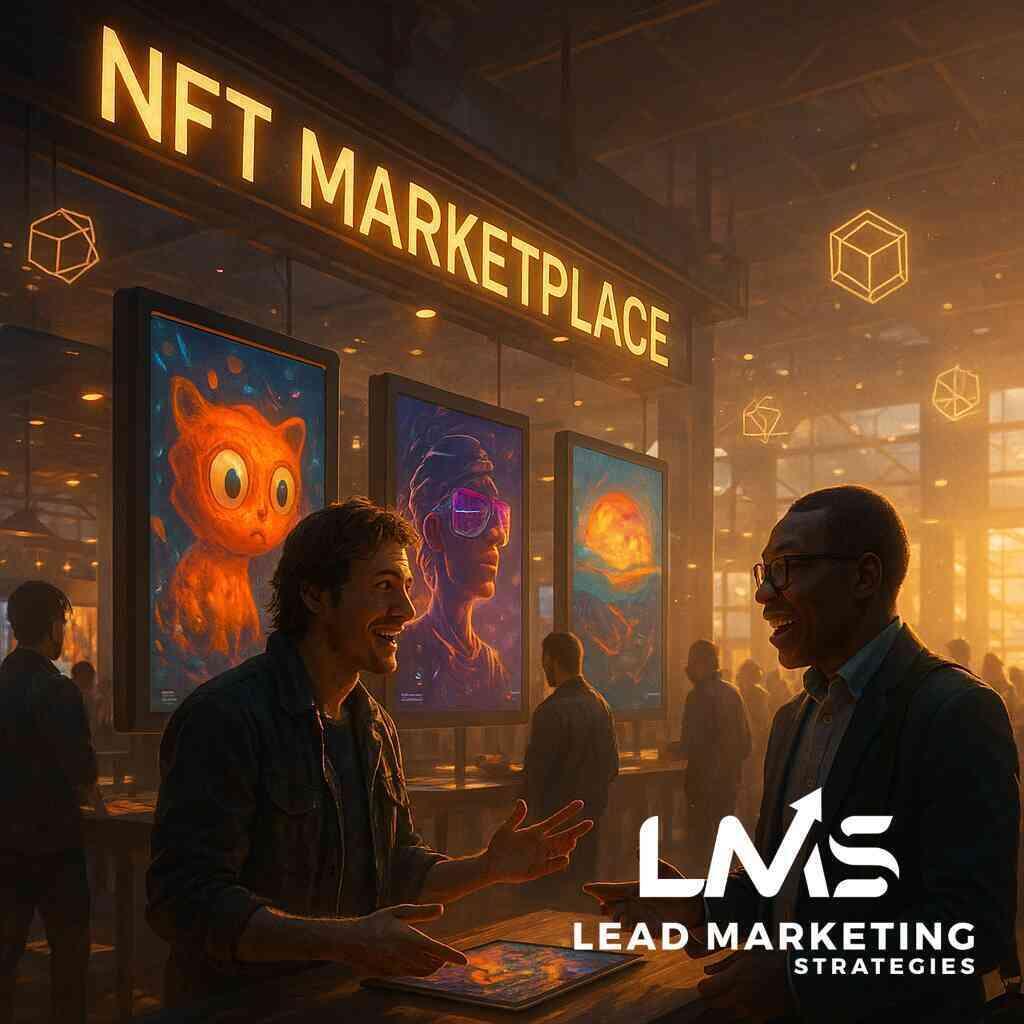

Top 7 NFT SEO Tactics for Higher Rankings in 2026 Markets
NFT projects do not lose because the art is weak. They lose because nobody finds them. In 2026, buyers, collectors, and AI answer engines all run on search, and the projects that rank are the ones that treat SEO as infrastructure rather than an afterthought.

The short answer: the NFT SEO tactics that move rankings in 2026 are structured data for digital assets, optimization for AI search engines, visual and reverse-image SEO, marketplace-to-website cross-linking, entity-based SEO for creators and collections, security and trust signal optimization, and hyper-local community keyword targeting. Each one is execution-heavy, and each one compounds over time.
We work with NFT teams every week, and the pattern is consistent. Projects that build these seven tactics into their launch and post-mint plans get found. Projects that skip them spend money on ads to compensate for a website Google barely understands. Here is how to do all seven properly.
Why Do NFT Projects Need SEO Tactics Built for 2026?
Because search itself changed. Google now blends traditional results with AI overviews, and buyers increasingly ask Gemini, ChatGPT, or Perplexity for recommendations before they ever open OpenSea. If your project is not readable by those systems, you are invisible at the exact moment of decision.
There is a second reason. NFT search results are crowded with phishing clones, copycat collections, and fake mint pages. Strong technical SEO is how your official domain outranks the imposters. In our experience, the projects that rank well also suffer fewer impersonation problems, because Google has learned which site is the real one.
Treat these seven tactics as a checklist you work through in order. None of them require a massive budget. They require attention to detail and a willingness to publish real information about your project.
1. How Do You Use Schema Markup for NFT and Blockchain Assets?
You add structured data that tells search engines exactly what your asset is: the mint price, the blockchain network, the creator, the royalty percentage, and the collection it belongs to. Search engines cannot infer those details from a pretty landing page. You have to declare them in code.
Start with these schema types:
- Product schema for individual NFTs, including price, currency, and availability.
- CryptoDigitalToken markup to declare the token standard, contract address, and network.
- CreativeWork to describe the artwork itself, its medium, and its creator.
- Organization and Person schema to connect your brand and founders to the collection.
Validate everything in Google’s Rich Results Test before you ship it. Broken schema is worse than no schema, because it signals sloppiness to both users and crawlers. If you want a deeper walkthrough of how structured data interacts with blockchain search visibility, our team covers it in this guide to blockchain SEO and NFT marketing strategy.
2. What Is Generative Engine Optimization and Why Does It Matter for NFT SEO?
Generative Engine Optimization, or GEO, is the practice of formatting your content so AI models can pull clean, quotable answers from it and cite you as the source. It matters because a growing share of NFT research now starts inside an AI chat window instead of a search bar.
The execution is simpler than the name suggests:
- Answer the core question in the first two or three sentences of every section.
- Use question-style headings that match how people actually ask.
- Keep paragraphs short and put key facts in lists or tables.
- Include specific numbers, names, and contract details that generic pages cannot copy.
- Cite your own primary information, like audit results and roadmap dates.
AI models reward clarity and specificity. Vague marketing language gets skipped. If you want help structuring a content library that AI engines will quote repeatedly, our answer engine optimization services are built for exactly this problem.
3. How Do You Optimize NFT Images for Visual and Reverse-Image Search?
You optimize the file itself, not just the page around it. Collectors in 2026 routinely reverse-image-search artwork to verify authenticity, trace a collection’s origin, or find the original creator. If your images are unnamed, uncompressed, and stripped of metadata, you lose every one of those searches.
Do this for every asset you publish:
- Name files descriptively, like collection-name-token-0147.webp, never IMG_8823.png.
- Write alt text that describes the artwork and includes the collection name naturally.
- Keep a consistent image naming convention across your marketplace listings and your own site.
- Compress without destroying detail, because page speed is a ranking factor and NFT galleries get heavy fast.
- Publish a dedicated gallery page on your own domain so the canonical version of each image lives with you.
This is also your best defense against copycats. When your original images are properly indexed and attributed, imposter listings struggle to outrank them.
4. Why Does Marketplace-to-Website Cross-Linking Matter?
Because marketplaces already have the domain authority your new project does not. You borrow some of that authority by building a clear, structured bridge between your OpenSea, Blur, or Magic Eden listings and your own website.
The mistake we see most often is a one-way link. A project links out to its marketplace page and calls it done. That does nothing for your own domain. Flip the direction where you can, and where you cannot, build the bridge with content:
- Publish collection pages on your site that describe each piece in detail, then link to the marketplace listing.
- Use descriptive anchor text like “view the full Genesis collection on OpenSea” instead of “click here.”
- Create comparison and explainer content around your collection that marketplaces will never write.
- Keep your brand name, contract address, and collection name identical everywhere so search engines connect the dots.
Consistency is the whole game here. Every inconsistency between your site and your listings dilutes the signal. Our NFT content marketing services exist to keep that messaging tight across every channel.
5. How Do You Build Entity-Based SEO for Creators and Collections?
You stop optimizing for keywords and start optimizing for recognition. Google builds a knowledge graph of entities: people, brands, collections, and concepts it understands as distinct things. Your goal is to become one of those things, connected to the right neighbors.
In practice, that means:
- Publishing a founder page with real names, bios, and credentials, marked up with Person schema.
- Listing your smart contract address publicly and consistently across your site and profiles.
- Connecting your brand to established categories like generative art, Web3 gaming, or digital collectibles.
- Earning mentions on reputable sites in your niche so the association gets reinforced externally.
- Keeping your social profiles, marketplace pages, and website all telling the same story.
Entity work is slow and unglamorous. It is also the difference between ranking for your own brand name and ranking for the category terms buyers actually search. If you want to see how this plays out across a full launch, read our breakdown of advanced NFT marketing strategies for Ethereum projects.
6. How Do Security and Trust Signals Affect NFT Search Rankings?
Directly and heavily. Google’s quality guidelines reward experience, expertise, authority, and trust, and for anything involving money and smart contracts, trust is the deciding factor. Pages that prove your project is legitimate rank better than pages that only look polished.
Build dedicated pages for the signals buyers and crawlers both want to see:
- Smart contract audit results, with the auditor named and the report linked.
- Contract address and network details, published clearly so nobody has to guess.
- Team identities, with real names and verifiable backgrounds where possible.
- Roadmap and delivery history, including what you said you would ship and what you actually shipped.
- Legal and compliance information, including terms, jurisdiction, and how royalties work.
Transparency is an SEO strategy. It is also a reputation strategy. When someone searches your project name plus “scam” or “legit,” you want your own audit page ranking for that query. Our reputation management services help NFT teams take control of those results before a problem spreads.
7. How Should NFT Projects Target Local and Community Keywords?
By going narrow. Chasing broad terms like “best NFT project” is a losing battle for most teams. Long-tail keywords from token-gated communities, Discord hubs, regional Web3 events, and niche collector groups convert far better and rank far faster.
Where to look:
- City and region plus Web3 event terms, like “NFT meetup Austin” or “Web3 gallery Miami.”
- Community-specific phrases that only your holders use.
- Questions people ask in Discord before they mint, such as gas fee comparisons or wallet setup help.
- Collaboration and crossover terms with adjacent communities.
Publish content that answers those questions in plain language. A single well-written page about minting on a specific chain with a specific wallet can outrank a competitor’s entire blog. Our guide to improving Discord engagement with NFT marketing covers how to turn those community conversations into searchable content.
How Do You Optimize an NFT Marketplace Listing for Google Search?
You treat the listing as a landing page, not a gallery entry. That means a keyword-rich title, a complete description that explains the artwork and the collection, consistent naming, and a link back to your own site where the canonical information lives. Marketplaces control most of the on-page elements, so your leverage is in the description, the collection metadata, and the content you publish on your own domain that references the listing.
Do not rely on the marketplace alone. Build the authoritative page yourself, then point to the listing from it.
What Is the Best Schema Markup for Blockchain and Crypto Assets?
There is no single perfect type yet, so layer them. Use Product schema for pricing and availability, CryptoDigitalToken for token and contract details, CreativeWork for the artwork itself, and Organization plus Person schema for the brand and creators. Validate each layer separately. Combined markup gives AI overviews and rich results the most to work with.
How Can an NFT Project Outrank Phishing Clones and Copycat Collections?
By being the most verifiable result on the page. Publish your contract address prominently, keep your domain consistent everywhere, earn links from reputable sources, and maintain an active, indexed site with fresh content. Clones cannot fake an audit trail, a founder history, or years of consistent publishing. Search engines reward the site with the deepest trust footprint, and that is a game you can win deliberately.
How Do You Optimize NFT Content for Voice and Conversational Queries?
Write the way people talk. Voice searches are longer and more natural, like “what is the gas fee to mint on Ethereum right now” rather than “Ethereum mint gas fee.” Answer those questions in full sentences near the top of the page, use FAQ sections with real phrasing, and keep answers short enough for an assistant to read aloud. Conversational content also happens to be exactly what AI overviews prefer to quote.
Where Should an NFT Project Start With SEO Tactics?
Start with trust and structure. Get your schema markup live, publish your contract and audit information, and build a clean site architecture before you chase a single keyword. Those three moves make everything else easier and protect you from the impersonation problems that plague this space.
From there, layer in entity work and content. It takes a few months to compound, but the results hold. If you would rather not build this from scratch, our team can map it out with you. You can also build a lead generation system around your NFT project so the traffic you earn turns into holders and buyers instead of just visits.
Get Help Putting These NFT SEO Tactics to Work
You do not have to figure this out alone. Our team at Lead Marketing Strategies works with NFT projects every day on exactly these problems, from schema markup to AI search visibility to reputation defense. If you want a clear plan instead of a list of tactics, book a free consultation and we will walk through your project together. Prefer to talk it through right now? Call us at (833) 532-3100.
And if you want our team in your pocket, download our mobile app: iOS App Store or Google Play. It is the fastest way to stay connected with our strategists between calls.
Every article is written by one of our founders and independently reviewed by the other before it goes live.

Ken Key is Chief Technology Officer and Co-Owner of NFT Marketing Strategies, where he helps NFT founders, creators, and marketplaces grow through SEO, AI, and systems that actually convert. He builds and tests everything with care, and he runs the business as a family company with his wife Dominique.

Dominique Key is Chief Marketing Officer and Co-Owner of NFT Marketing Strategies. She helps NFT creators and founders build trusted brands through NFT marketing, NFT SEO, and community-first growth. Dominique runs the agency with her husband Ken and brings a family-business level of care to every collection she supports.