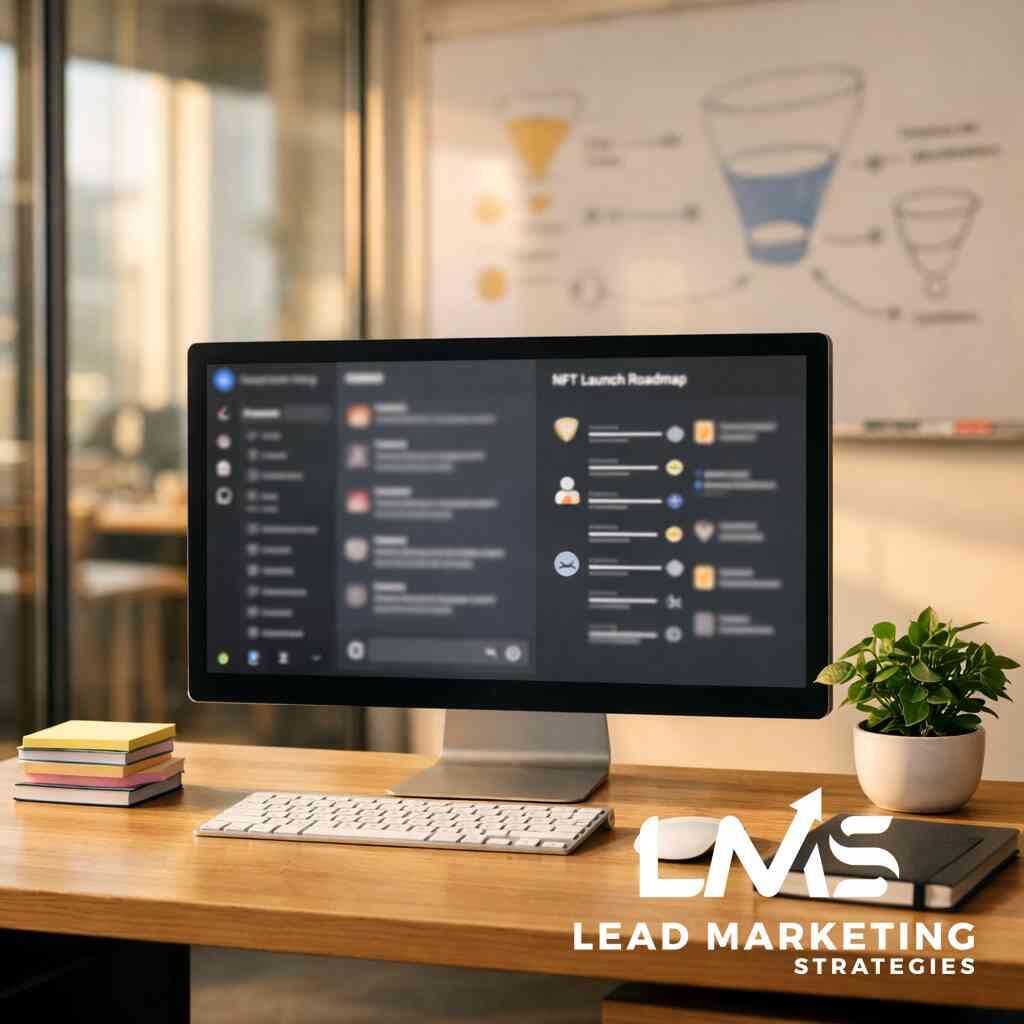
Discord community management drives NFT sales because it turns attention into trust, and trust into minting decisions. A server can look active and still fail to convert if the welcome flow, moderation, and token-gated experience do not guide people toward action.
If your server feels loud but sales stay flat, that is frustrating. We hear that a lot from founders who expected chatter to become whitelisted wallets. It rarely happens by accident.
Key Takeaways
- Discord community management improves NFT sales conversion by building trust, answering objections, and moving members from curiosity to minting.
- A busy server without structure can hurt whitelist promotion and minting because lurkers never get a clear reason to buy.
- Strong NFT audience engagement uses welcome flows, role gates, events, and support to turn casual members into holders.
- Discord works best when it supports NFT project launch strategy, NFT roadmap marketing, and NFT utility marketing, not hype alone.
- Projects with stronger community systems usually see better NFT campaign ROI than collections that rely on announcements and memes only.
Why an NFT Discord can look busy and still fail to sell out
A busy Discord does not guarantee sales because member count is not the same as buyer intent. Real NFT sales conversion depends on how well your server moves people from passive observation to belief, then from belief to minting. If the chat is active but the path is unclear, most members will lurk, leave, or wait for secondary market proof.
The hidden gap between member count and NFT sales conversion
The hidden gap is simple: most Discords measure volume, not readiness. You may have 8,000 members, but if only 300 understand the art, utility, timeline, and price logic, the rest are spectators. That is why NFT community building needs structure, not just noise.
In practice, the best projects use Discord as a decision-making tool. They segment holders, whitelist prospects, and first-time visitors differently. They also pair the server with NFT influencer outreach and NFT social media marketing so people arrive with context, not confusion. From our Commack studio on Long Island, we have seen projects pick up interest fast when the Discord and launch page tell the same story.
Here is the part most founders miss: people do not mint because a server feels alive. They mint when the server makes them feel informed, included, and safe enough to act.
What weak Discord community management does to whitelist promotion and minting conversion
Weak moderation creates friction at every step. Questions get buried. Rules feel vague. Bots over-verify. New members never learn why the collection matters. That hurts whitelist promotion and slows minting conversion because people stop trusting the process.
Strong Discord management removes that friction with clear roles, pinned instructions, and fast answers. It also supports airdrop campaign management and reveal events without confusion. If you are comparing channels, think of it this way:
Discord tactic Weak execution Strong execution Welcome flow Generic greeting Clear next steps, FAQs, and role selection Whitelist process Hidden rules Simple criteria and deadline reminders Event pacing Random announcements Scheduled updates tied to the roadmap Support Slow replies Fast moderation and ticket routing
If you are serious about launch performance, a clean support system matters as much as art. The FTC’s advertising guidance also matters here, especially if your team uses paid hype or influencer posts. Transparency protects trust, and trust protects conversion.
How NFT audience engagement turns casual lurkers into buyers and holders
NFT audience engagement works when members feel seen before they feel sold to. That means polls, feedback threads, sneak peeks, voice chats, and community wins tied to the roadmap. A lurker becomes a buyer after a few consistent touchpoints, not after one announcement.
We saw this with a small Ethereum collection that had decent art but weak momentum. Once the team added weekly founder AMAs, clearer utility updates, and a simple support queue, mint interest improved within days. The server stopped feeling random. People started asking practical questions about price, supply, and post-mint benefits.
A useful rule: engagement should answer three questions quickly.
- Why this project?
- Why now?
- Why hold after mint?
That is where holder retention strategy starts. It is also where NFT utility marketing matters more than raw hype. If your community only shows up for giveaways, you do not have a holder base yet. You have traffic.
The trust engine inside Discord that moves people from curiosity to commitment
Discord moves people to commit when every touchpoint reduces uncertainty. The welcome message, role setup, event cadence, and token-gated access should all reinforce the same promise. That is how community trust building turns into whitelists, mints, and stronger long-term holders.
The engagement funnels that build community trust from welcome message to token-gated access
A good engagement funnel is not complicated. It is disciplined. First, the welcome message tells people what the project is and where to start. Then roles sort members by interest level. After that, token-gated channels give real value to holders and serious prospects. Finally, events and updates keep the room warm until launch. A practical funnel often looks like this: 
- Welcome message
- Explain the project in one paragraph.
- Link the roadmap, FAQ, and mint page.
- Role selection
- Separate artists, collectors, WL applicants, and holders.
- Education
- Use short posts on supply, utility, and launch timing.
- Proof
- Share previews, partner mentions, and real progress.
- Access
- Unlock gated areas for holders and serious supporters.
This is where NFT copywriting and NFT content marketing do real work. Clear words lower hesitation. A concise roadmap page, strong FAQs, and consistent announcements create momentum without feeling forced. If you want a broader strategy around this, our community growth approach is built around that exact funnel.
One client in the Long Island market had a server full of bots and almost no buyer behavior. We cleaned up the onboarding, added weekly Twitter Spaces promotion, and tightened the whitelist process. The room got smaller, but the intent got stronger. That is the right trade.
For projects that need more than Discord alone, pair the server with social media support and an NFT SEO plan so discovery keeps working outside the chat room. Discord should close the deal, not carry every part of it.
A final point: Discord trust also depends on the rest of your brand. If your site, mint page, and announcements do not match the server tone, people hesitate. That is why many teams also invest in mint launch support and, when needed, a broader consulting strategy.
If you want help tightening the path from curiosity to commitment, NFT Marketing Strategies can build the community system around your launch, your roadmap, and your holder goals. You do not need to guess your way through it. Start by calling +18335323100 or downloading the NFT Marketing Strategies app and map the next launch step with a team that does this every day from Commack, Long Island.
Frequently Asked Questions
How does Discord community management increase NFT sales?
Discord community management increases NFT sales by creating trust, clarity, and urgency. People buy when they understand the project, know what happens next, and feel the team is active and responsive. Good moderation, clear whitelist rules, and strong onboarding reduce friction and improve minting conversion. ### What is the difference between an active Discord and a converting Discord?
An active Discord has messages. A converting Discord has structure. The difference is that a converting server guides members through roles, education, proof, and action. It supports whitelist promotion, answer-driven support, and token-gated value so members move from watching to buying.
How do you grow a Discord server for an NFT drop?
You grow it by pairing Discord with NFT social media marketing, influencer outreach, and pre-launch content. Use Twitter Spaces, teaser posts, and a clear roadmap. Then make the server easy to join and easy to understand. Growth without onboarding usually wastes attention.
How long before a mint should marketing start?
Start early enough to build familiarity, usually several weeks before mint. That gives you time for education, whitelist promotion, community trust building, and event warm-up. The exact timeline depends on supply, utility, and how crowded your category is, but rushed launches usually underperform.
What is a whitelist and why does it matter?
A whitelist is an approved list of wallets that can mint early or at a better price. It matters because it rewards early supporters and helps you forecast demand. A good whitelist process also supports NFT community engagement by giving members a clear reason to stay active.
Does SEO work for NFT projects?
Yes, especially for long-tail discovery terms like NFT promotion strategies, how to promote NFT drops, and digital collectibles SEO. SEO helps capture people who are already researching before launch. It works best when paired with Discord, social, and launch-page copy that all tell the same story.
Can a smaller NFT community still sell out?
Yes, if the community is highly engaged and the offer is clear. A smaller server with strong trust can outperform a larger one with weak intent. Focus on genuine followers, clear utility, and strong launch messaging instead of chasing empty member counts.
The NFT Marketing Strategies Team
Our team of marketing experts specializes in helping nft projects grow their businesses through strategic digital marketing, SEO, and customer acquisition.
View all articles